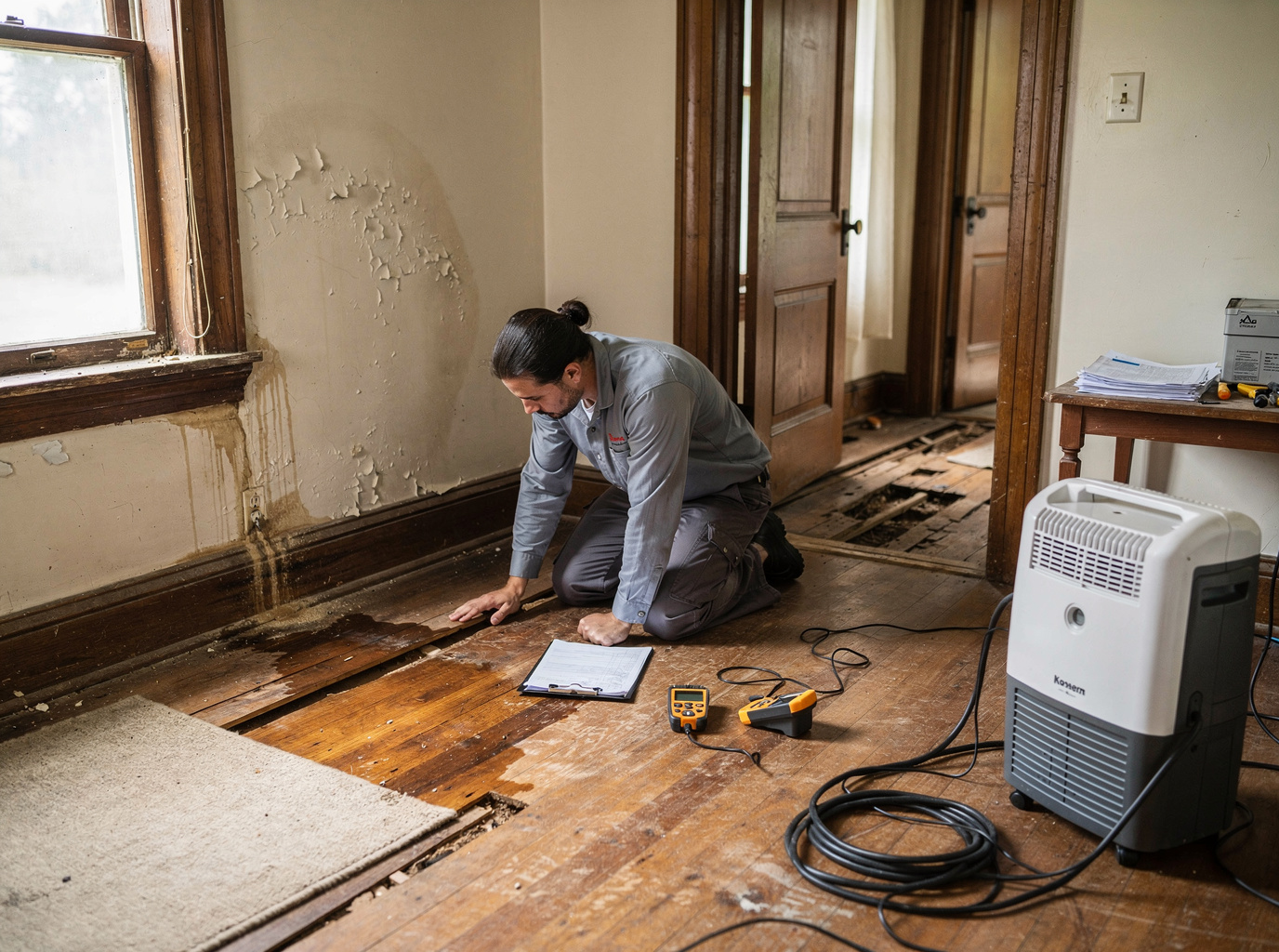
Holly Springs homes sit on clay-heavy soils that hold water after summer thunderstorms common in Wake County. Crews from 5511 Capital Center Dr reach properties off NC-55 or Holly Springs Road within 30 minutes when a slab leak or roof breach hits neighborhoods like Twelve Oaks or Sunset Ridge. Technicians pull carpet, cut wet drywall, and set drying equipment before mold sets in during the humid months.
Newer construction around Holly Springs Towne Center and older ranch homes near Bass Lake Park both see water intrusion from different sources. We map moisture with thermal cameras, extract standing water from crawlspaces, and monitor humidity levels daily until readings drop below 50 percent. Evening calls on weekdays or Saturday mornings fit the Mon–Fri 8am–6pm and Sat 9am–2pm schedule.
Nearby Cary and Wake Forest traffic patterns affect response times, so we stage equipment at the shop for quick runs down US-1 to Holly Springs addresses. Every job includes photos of affected drywall and flooring so homeowners see exactly what was removed and dried.
Around Holly Springs
We regularly work near:
- 📍Bass Lake Park
- 📍Ting Park
- 📍Holly Springs High School
- 📍Holly Springs Towne Center
- 📍Holly Springs Cultural Center
- 📍Holly Springs Library
Water Damage Restoration in Holly Springs — Local Notes
- •Clay soils around Holly Springs slow drainage after heavy rains, pushing water under slab foundations in subdivisions built since the 1990s.
- •Many homes near Ting Park have attached garages with shared walls that let moisture travel into living spaces during humid subtropical summers.
- •Crawlspace access is tight in older Boylan Heights-style cottages south of Main Street, requiring smaller drying fans than newer two-story builds.
- •Storm runoff from the rolling terrain near Bass Lake often enters through window wells on lower lots along Holly Springs Road.