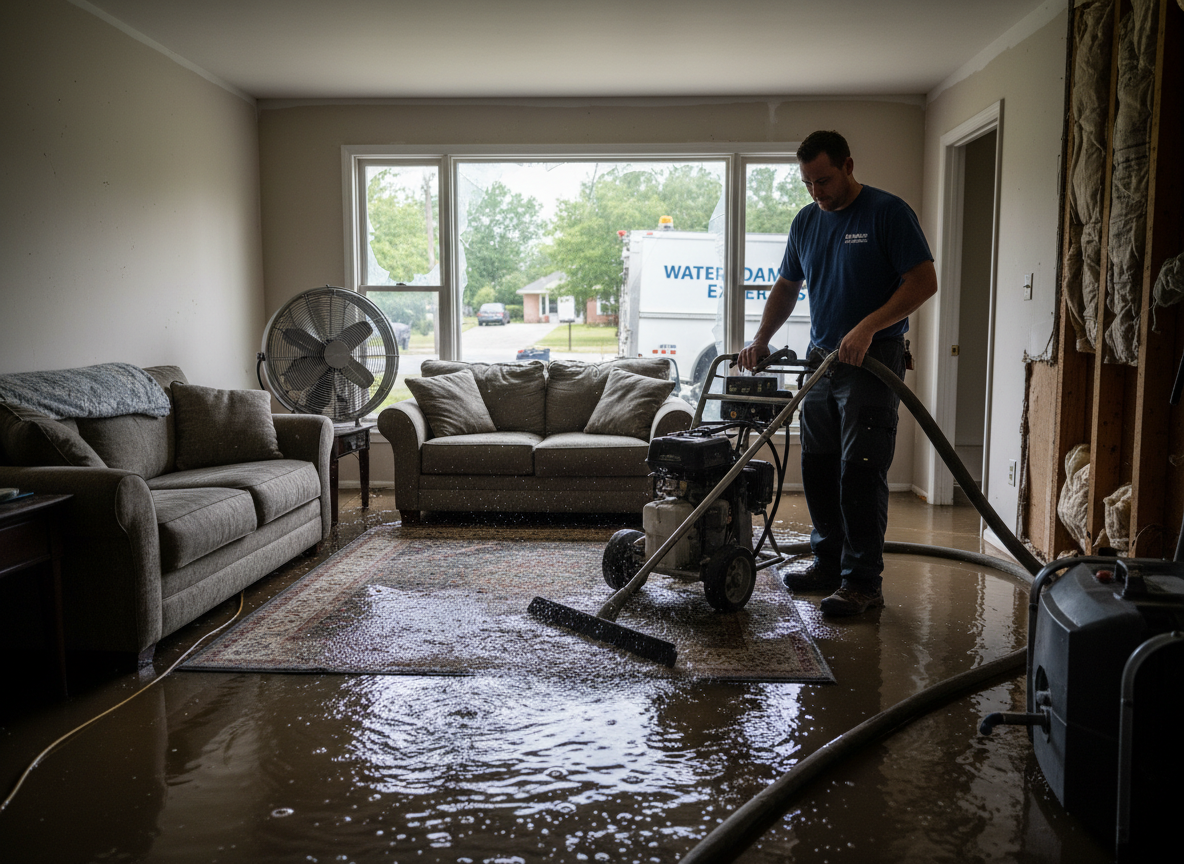
Raleigh’s humid subtropical summers drive rapid mold growth after any water event, especially in older brick and frame homes built before 1970 in Oakwood and Boylan Heights. These neighborhoods often have original cast-iron drains and galvanized supply lines that corrode and fail without warning. Technicians must pull carpet, open walls, and use moisture meters on plaster and lath to prevent hidden saturation that later shows up as ceiling stains in second-floor rooms.
Mild winters still bring occasional ice dams on older slate roofs in Hayes Barton and Five Points, sending meltwater behind gutters and into attics. When that happens, crews focus on removing wet insulation before it collapses onto drywall. Properties near the Falls of Neuse corridor also see groundwater seepage after heavy rains because the clay-heavy soil drains slowly; subfloor drying often requires targeted air movers under cabinets rather than whole-room fans.
Downtown high-rises and Cameron Village condos add another layer: shared walls and concrete slabs trap moisture that travels to neighboring units. Restoration plans must include neighbor notification and moisture mapping across multiple floors to satisfy building management rules. In all cases, extraction begins within hours because humidity above 60 percent turns a contained leak into a multi-room remediation project within two days.
Technician insight
In Raleigh the thing that catches most people out with Emergency Water Damage Restoration is how quickly humidity turns a small leak into widespread mold behind plaster in 1920s Oakwood homes. Clay soil around foundations in Boylan Heights and near the Falls of Neuse keeps moisture against sills long after the rain stops, so we always check the crawlspace even when the leak is upstairs.
Hidden saturation after supply line break
A homeowner in North Hills called after a second-floor supply line split overnight. Extraction removed water from hardwood, but meters showed saturation in the plaster walls and subfloor. Crews opened baseboards, placed air movers under the floor, and dried the space over four days before any mold could form.
Emergency Water Damage Restoration Services We Offer
✓Burst Pipe Water Extraction
Immediate removal of standing water from supply-line failures common in pre-1980 homes in Mordecai and Glenwood South.
✓Storm and Flood Cleanup
Pumping and drying after heavy rain events that overwhelm drainage in low-lying sections of Boylan Heights and near Dorothea Dix Park.
✓Sewage Backup Remediation
Safe removal and disinfection of contaminated water from older municipal lines that back up during storms in Downtown Raleigh and Oakwood.
✓Attic and Insulation Drying
Targeted drying of wet cellulose and fiberglass after roof leaks or ice-dam issues in Hayes Barton and Five Points homes.
✓Basement and Crawlspace Drying
Moisture removal from below-grade spaces in Wake County homes where clay soil holds water against foundations.
Emergency Water Damage Restoration Cost in Raleigh, NC
| Service | Typical Range | What Affects It |
|---|---|---|
| Initial inspection and moisture mapping | $150–$300 | Varies with home size and number of affected levels |
| Water extraction | $400–$900 | Higher when sewage or Category 3 water is present |
| Equipment drying package | $600–$1,800 | Daily rate for air movers and dehumidifiers; length depends on material type |
| Crawlspace or attic drying add-on | $350–$750 | Required for older homes with limited access in Oakwood or Hayes Barton |
Ranges are typical for Raleigh, NC and confirmed with an exact written quote before any work starts.
How it works
- 1
Arrival And Safety Check
Technician arrives, shuts off water source if still active, and assesses electrical hazards before any extraction begins.
- 2
Water Removal
Truck-mounted pumps and portable extractors pull standing water from floors, carpets, and hard surfaces.
- 3
Moisture Mapping
Infrared cameras and meters locate hidden moisture in walls, subfloors, and ceilings throughout the affected structure.
- 4
Drying And Monitoring
Air movers, dehumidifiers, and daily readings continue until materials return to documented dry standards.
- 5
Final Walk-Through
Homeowner reviews dried areas and receives guidance on any remaining repairs needed from other trades.
Pricing
Upfront written quote after inspection; final cost depends on water volume, affected square footage, and drying time required.