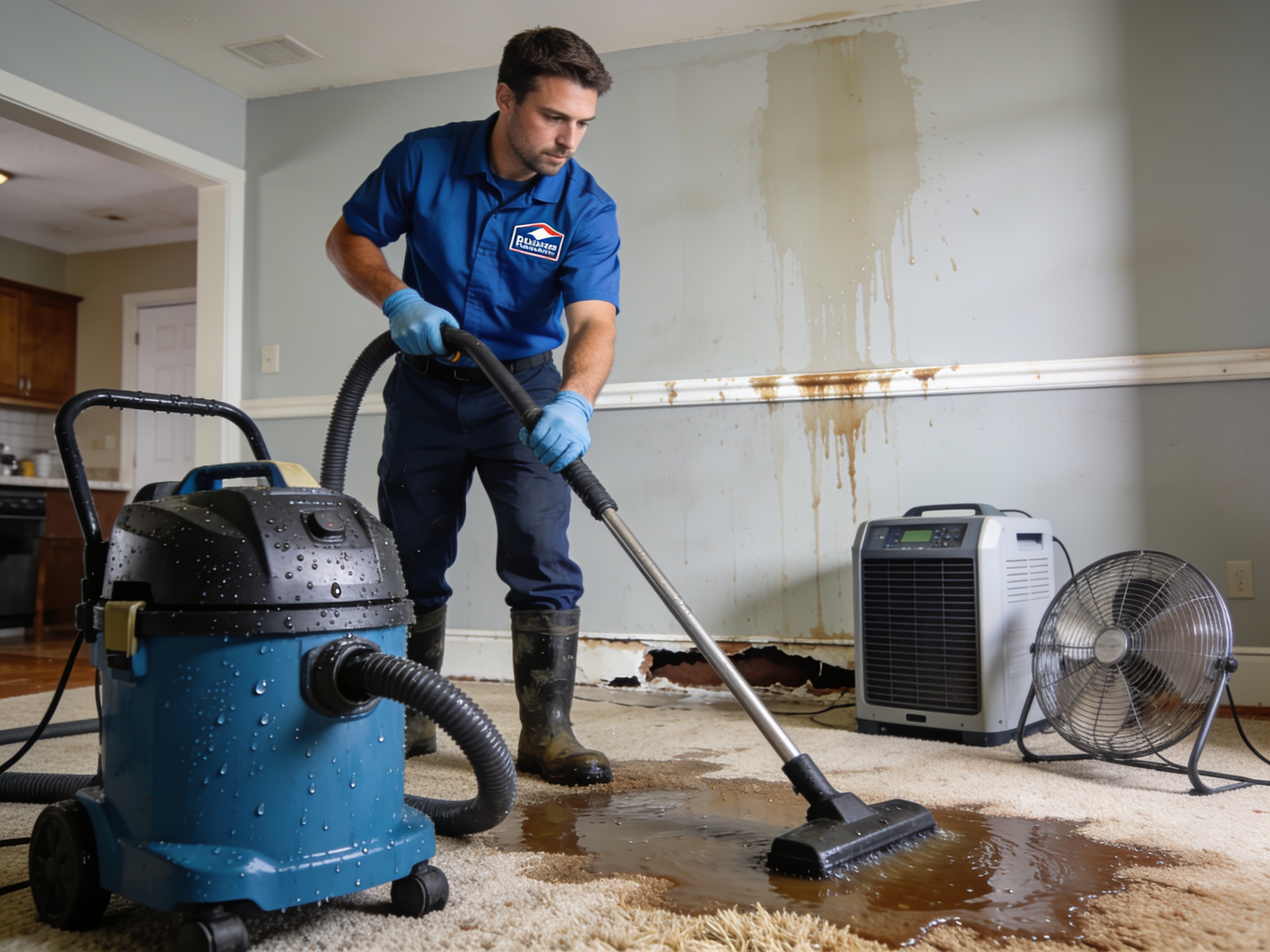
Raleigh's humid subtropical climate brings heavy summer storms that saturate crawl spaces and basements in older neighborhoods like Oakwood and Boylan Heights. Homes built before 1970 often have plaster walls and hardwood floors over dirt crawl spaces that trap moisture long after the rain stops. Extraction must reach under subfloors before mold sets in within 48 hours. Technicians use moisture meters on brick foundations common in Cameron Village and Five Points to locate hidden water that air movers alone cannot reach.
Mild winters still produce pipe bursts in uninsulated lines along Falls of Neuse and Hayes Barton. When water migrates into North Carolina State Capitol area historic structures, crews avoid aggressive demolition that could violate local preservation rules. Instead they rely on targeted drying mats and negative air machines to protect original millwork while pulling moisture from behind wainscoting. Nearby Cary and Wake Forest properties with slab-on-grade construction require different protocols because water travels laterally under tile rather than draining downward.
After any event near Pullen Park or the Raleigh Convention Center, crews check for sewage cross-contamination from older city lines. Antimicrobial application follows IICRC standards but is applied only where porous materials cannot be fully dried. Homeowners in Glenwood South and Mordecai frequently discover that HVAC returns have pulled moisture into ductwork, requiring separate cleaning to prevent widespread odor issues weeks later.
Technician insight
In Raleigh the thing that catches most people out with Water Damage Cleanup is how quickly moisture travels laterally under the slab in neighborhoods like Five Points and Mordecai because of our clay soils and flat lots. Homeowners run fans for a weekend and think the job is done, but without pulling baseboards and checking behind plaster the humidity stays trapped and mold appears two weeks later during one of our humid summer stretches.
Crawl Space Flood After Summer Storm
Heavy rain overwhelmed a downspout in an Oakwood home and water entered the crawl space. Crews found six inches of standing water against the brick foundation and elevated moisture in the subfloor above. Extraction and dehumidification ran for four days until readings dropped below 12 percent, preventing mold from reaching the first-floor hardwood.
Water Damage Cleanup Services We Offer
✓Emergency Water Extraction
Rapid removal of standing water from basements and first floors using truck-mounted pumps before secondary damage spreads through Raleigh's clay-heavy soils.
✓Structural Drying and Dehumidification
Placement of commercial air movers and dehumidifiers calibrated for Wake County's high humidity to bring moisture levels below 15 percent in walls and subfloors.
✓Carpet and Hardwood Floor Restoration
Cleaning, drying, and reinstallation of carpets plus sanding and refinishing of oak floors common in North Hills and Cameron Village homes after water intrusion.
✓Crawl Space Water Removal
Pumping and drying of dirt crawl spaces found under older Boylan Heights and Oakwood residences to stop mold growth before it reaches living areas.
✓Content Cleaning and Pack-Out
Removal, cleaning, and storage of furniture, documents, and belongings from affected rooms in Downtown Raleigh or Glenwood South properties.
Water Damage Cleanup Cost in Raleigh, NC
| Service | Typical Range | What Affects It |
|---|---|---|
| Small area extraction and drying | $450–$900 | Single room under 200 sq ft with no hidden moisture |
| Whole floor cleanup | $1,200–$2,800 | Multiple rooms plus crawl space access required |
| Crawl space drying | $600–$1,400 | Dirt floor homes common in historic districts |
| Content pack-out and cleaning | $350–$1,100 | Volume of belongings and storage duration |
Ranges are typical for Raleigh, NC and confirmed with an exact written quote before any work starts.
How it works
- 1
Arrival And Safety Assessment
Technicians arrive within hours, shut off power where needed, and identify electrical hazards in wet areas of the home.
- 2
Water Extraction
Standing water is pumped out using portable and truck-mounted equipment suited to Raleigh's flat terrain and clay soils.
- 3
Moisture Mapping
Infrared cameras and meters locate hidden moisture behind walls and under floors in older Wake County construction.
- 4
Drying And Monitoring
Equipment runs with daily checks until readings reach safe levels, typically three to five days depending on season.
- 5
Final Sanitation
Affected surfaces receive antimicrobial treatment where required before contents are returned.
Pricing
Most water damage cleanup jobs in Raleigh fall between several hundred and several thousand dollars depending on volume of water and materials affected.